In this article
The night before an exam usually takes one of two shapes. Either you studied in advance and just want to make sure nothing has slipped, or you are behind and want to make up for it in one night. Either way, what you do tonight can raise or lower tomorrow's mark — and many things that seem useful actually do harm.
First principle: tonight is review, not learning
A topic you have not studied at all by tonight is hard to learn in the last few hours; trying to usually just raises your anxiety and eats into the time for reviewing what you do know. If you studied in advance, only review tonight: summaries, key points, formulas, questions you got wrong before.
If you are prepared: a calm night
- One quick review of all the topics, using summaries or flashcards, not the whole book.
- A few practice questions on the important topics, without looking at the answers. This prepares the mind more than rereading does; we explain why in active recall.
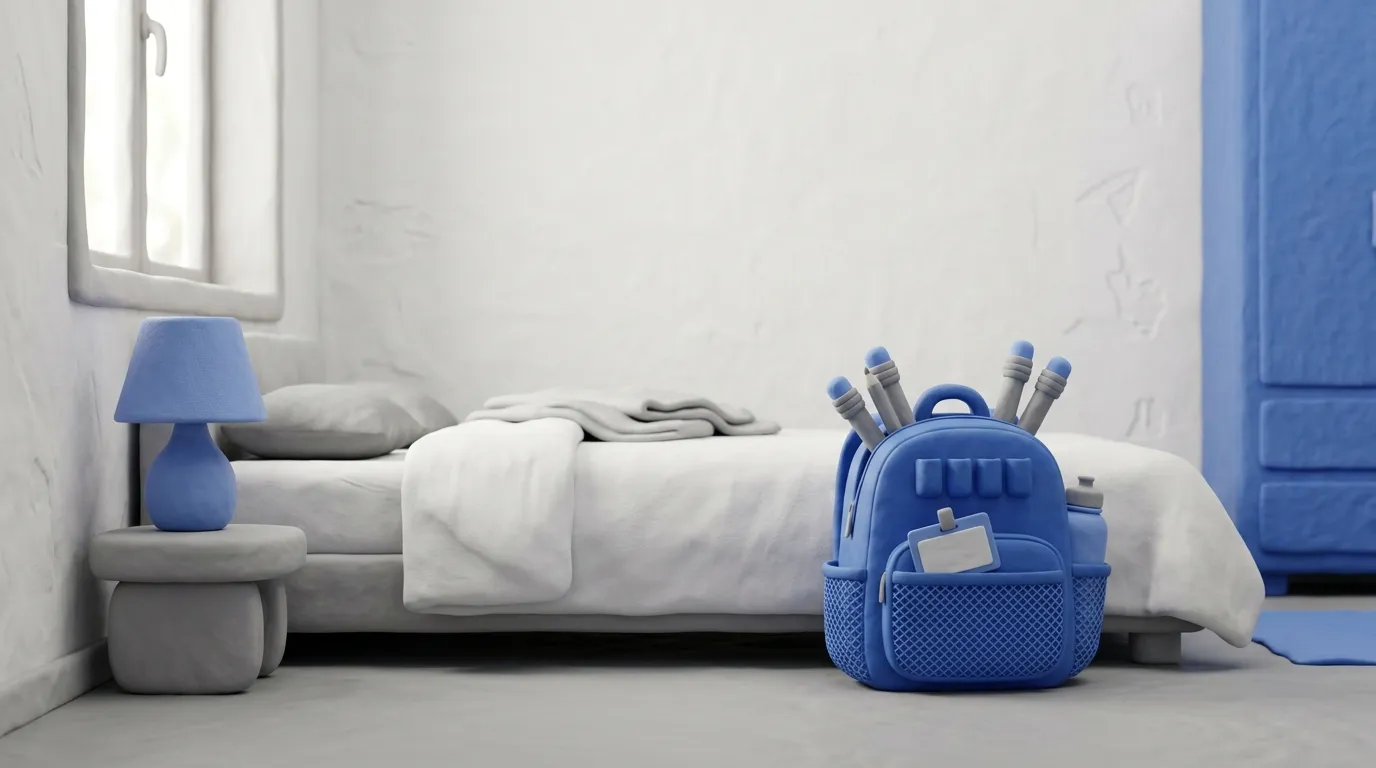
- Pack tomorrow's bag: your card, pens and pencils, a calculator if allowed, water.
- Go to bed early. Sleep consolidates what you have studied. The details are in sleep and learning.
If you are behind: choose wisely
When time is short you cannot study everything, so you have to choose:
| Priority | What to study |
|---|---|
| First | Topics the lecturer or teacher stressed, or that came up in past exams |
| Second | Topics you half know; a little study raises their marks |
| Third | Basic topics the others build on |
| Last | Long topics you have never studied |
And even then, do not stay up all night. A few hours of sleep will probably help your mark more than a few hours of tired studying.
What not to do
- Do not start a heavy new topic, unless you truly have no other way.
- Do not overdo caffeine. Too much tea and coffee pushes sleep back and leaves you more tired in the morning.
- Do not open a new source. A book or notes you have never seen only bring confusion.
- Do not stay up late on your phone. Screen light and exciting content push sleep back.
The morning of the exam
- Eat breakfast, even a little. The brain does not work well on an empty stomach.
- A very light review, ten to fifteen minutes, only of your summaries.
- Arrive early; rushing and being late raise anxiety.
- Take a few slow, deep breaths before you go in. If anxiety troubles you a lot, read exam anxiety.
In the exam
First read the whole paper once and start with the questions you are sure of. Look at the marks for each question and divide your time to match. Keep the last few minutes for checking. If you reach a question that empties your mind, move past it; most of the time the answer comes back later.
If you have exams tomorrow and the day after
When exams are back to back, the night before the first one you will be tempted to study for the second too. That usually harms both. Tonight, review only for tomorrow's exam and sleep. Tomorrow, after the exam, take a short break (food, a short walk, no going over the finished exam), then turn to the next one with a fresh mind. If your whole exam season is back to back, plan the order of studying in advance; the method is in end-of-term exam season.
For next time
The best night before an exam is one where there is nothing to make up. If you were behind this time, spend a few minutes after the exam thinking about why: a late start? No clear plan? No review during term? The answer to that question is the start of a better plan for the next exam. Spaced repetition and planning your term were written for exactly this.
In Student OS
Every exam in exams has a countdown, and its page tells you days in advance whether the work left fits the time left — so you reach fewer catch-up nights. Each exam's study plan sets out preparation sessions days ahead, and your flashcards are the very summaries you need the night before. After the exam, enter your grade so your average stays up to date. Guides: exams, flashcards.
Summary
- Tonight is review, not new learning.
- Prepared? Light review, a few practice questions, bag packed, sleep.
- Behind? Choose by priority, and still sleep.
- No heavy caffeine, new sources, late phone use or comparing with others.
- Breakfast, light review, arrive early, start with an easy question.