In this article
You cannot sleep the night before the exam. In the morning your stomach is in knots. In the exam, when you see the paper, things you knew yesterday suddenly cannot be found. Afterwards, outside the room, it all comes back. If that sounds familiar, you are not alone; exam anxiety is one of the most common experiences of school and university students.
First, know this: a little stress is not bad. Some excitement before an exam sharpens focus and gives you drive. The problem is when stress grows so large that it becomes an obstacle itself. The aim of this article is not to bring stress to zero, but to bring it down to a level that helps you rather than holds you back.
Why does the mind go blank in the exam?
When the body senses danger, it switches into "fight or flight": the heart beats faster, breathing gets shallow, and the body's resources go to quick reaction rather than calm thinking. That is perfect for escaping a real danger — and useless for solving a maths problem. The good news is that this reaction is physical, and it can be calmed with physical things too.
In the days before the exam
- Being prepared is the best calmer. Much of anxiety comes from feeling "I am not ready". A steady plan and spaced review shrink that feeling. If you have no plan, start with a study plan that actually gets followed.
- Take practice exams. When you have practised a few times under exam-like conditions — timed, no book — exam day is not "new" and frightening to your body.
- Write your worries down. For a few minutes before studying or before bed, write every worry you have about the exam on paper. Writing gets the circling thoughts out of your head and makes room for thinking.
- Do not sacrifice sleep. Staying up late raises anxiety and weakens memory. We explain why in sleep and learning.
- Exercise and move. Even a twenty-minute walk releases some of the tension in the body.
In the exam: when anxiety arrives
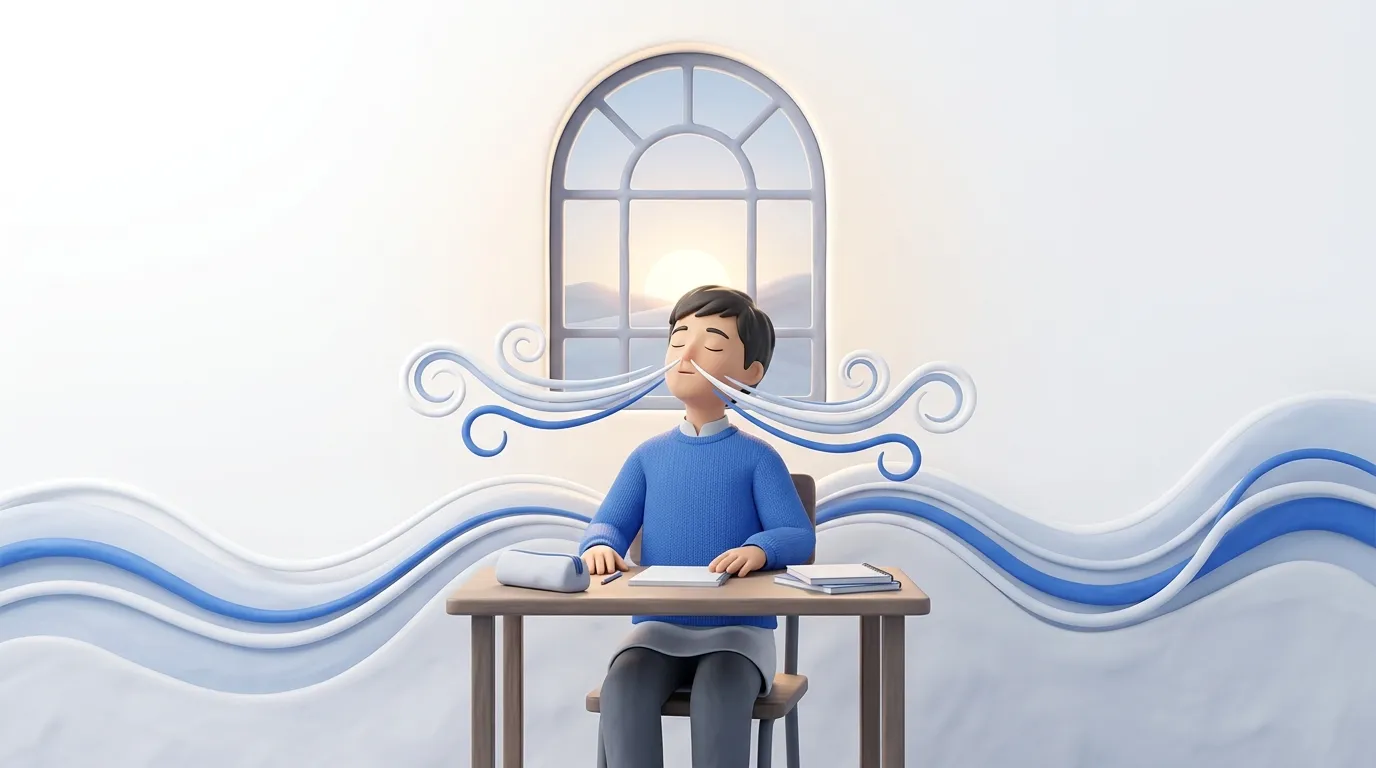
- Slow breathing: breathe in through your nose for four seconds, hold briefly, and breathe out slowly for six. Repeat a few times. A long out-breath tells the body there is no danger.
- Start with an easy question: look over the whole paper once and first answer a question you are sure of. Every right answer builds confidence.
- Mind gone blank? Do not get stuck. Skip that question and come back. Often, once you have answered a few others and calmed down, the answer comes back on its own.
- Listen to what you tell yourself: swap "I am going to fail" for "this is just an exam; I will do the best I can".
After the exam
When the exam is over, do not compare answers with others for an hour or two. Comparing usually just raises your anxiety for the next exam. Rest instead, and if you have another exam, go to it with a fresh mind. Later, when you are calmer, look at what went well and what did not — the way you would in a mock exam analysis.
When to get help from others
If the anxiety comes only in the few days before an exam and goes afterwards, the methods above are usually enough. But if your sleep and eating have been disrupted for weeks, if you feel hopeless all the time, or if anxiety is getting in the way of everyday life too, do talk to someone: the school or university counsellor, a psychologist, a doctor, or an adult you trust. Asking for help is not a sign of weakness; it is what successful people do.
In Student OS
Night review sums up each day and asks two questions: what went well today, and what will you do differently tomorrow. That short piece of writing is calming for many people. In exams, each exam's page tells you whether the days left are enough for its topics; knowing that replaces guessing and worry. And in the weekly check-in, if two weeks in a row have been harder than before, you will see a suggestion to talk to a counsellor. Guides: night review, exams, weekly check-in.
Summary
- A little stress is normal and useful; the aim is to reduce the excess.
- Preparation and practice exams are the best calmers.
- Write your worries down, sleep, keep moving.
- In the exam: slow breathing, easy question first, do not get stuck.
- If the anxiety is long and heavy, get help from a professional.