In this article
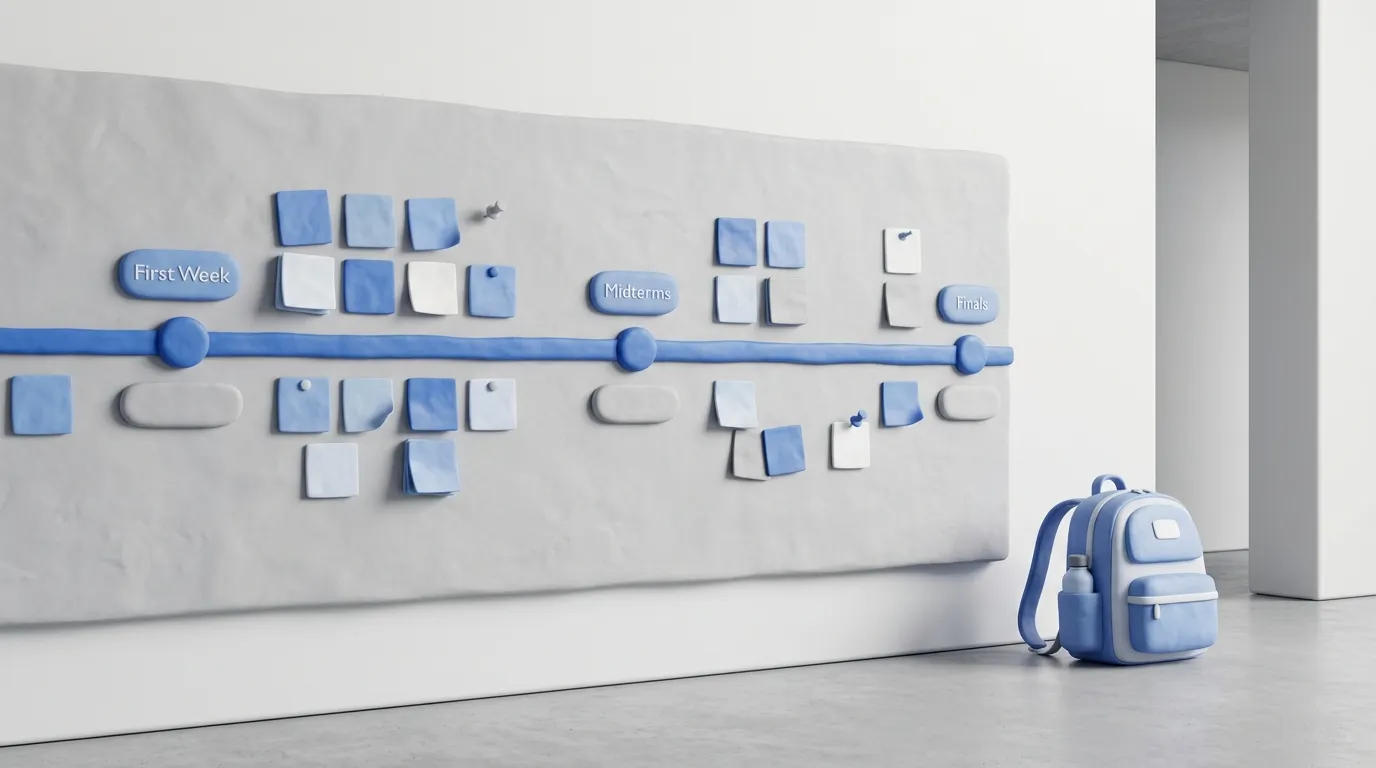
The first weeks of term are usually calm: a few introductory sessions, a few short handouts, and the feeling that "there is still time". Then the midterms arrive one after another, projects pile up, and at the end of term everything is squeezed into two weeks. This pattern is so common that many people think that is simply what a term is like.
But most of that pressure comes from one simple decision in the first week: whether you see the term as a whole or pass by it week by week. In this article you will find a practical method that keeps the term manageable from day one.
Week one: draw the map of the whole term
In each course's first session, the lecturer usually explains how the grade is divided: midterm, final, exercises, project, attendance. That information is gold. For each course, note down:
- Its credits and class hours
- The rough midterm date and the final exam date (from the academic office's exam timetable)
- The share of the grade for each part
- Projects and exercises, with their due dates
- The main source: the lecturer's notes, a book, or both
Now put all these dates on one calendar. The first thing you usually notice is that several exams or deadlines fall in the same week. Better to find that out now than three days before.
| Course | Credits | Midterm | Final | Project |
|---|---|---|---|---|
| General mathematics 2 | 3 | Week 8 | 10 Jan | None |
| Electrical circuits | 3 | Week 9 | 14 Jan | Lab report |
| English for specific purposes | 2 | None | 8 Jan | Translating a paper |
Give each course a weekly rhythm
The biggest mistake of a term is studying a course only in class. A simple rule that works in most fields: for every hour of class, about one to two hours of work outside it. Those hours include reviewing notes, solving exercises and reading the source.
You do not have to follow it exactly; what matters is that each course has a fixed slot in the plan every week. For example, "Monday afternoon: review the circuits notes and solve two exercises". When a course has a fixed slot, you no longer have to decide every week when to study it.
Cut projects into pieces from the start
A project due "by the end of term" usually starts in the last week. The answer is to break it, in the very first week, into a few small pieces with deadlines you set yourself: choosing a topic, gathering sources, a draft, the final version. Each piece gets a date on your calendar. If it is a group project, make the same split with your teammates.
Midterms: start two weeks before
A midterm usually carries a smaller part of the grade, but it matters in two big ways: it takes part of the grade out of the finals' pressure, and it shows you how the lecturer writes questions. For each midterm, set aside about two weeks of review sessions. The full method is in preparing for midterms.
See the finals from the middle of term
If you have reviewed every week since the start of term, the finals mean pulling it together, not learning from scratch. From about three weeks before the exams, gradually give more time to courses whose exam is sooner or carries a bigger share. When you have several exams in a row, the order of studying matters; we write about it in end-of-term exam season.
Keep your average in mind from the start
Some courses carry more credits and affect your average more. If your average matters to you (for a scholarship, a master's place without the entrance exam, or just your own peace of mind), know from the start which courses weigh more. Working it out is simple; we show how in term average and overall GPA.
In Student OS
In courses and terms you enter your term and courses with their class hours; classes appear on the calendar and the today page by themselves. Record exams in exams with their dates and share of the grade, and projects in assignments with their due dates. When you build the week's plan, the planner sees those exams and deadlines and shares out your time accordingly. The average calculator also shows at once how each grade affects your average. Guides: courses and terms, exams, assignments.
Summary
- In week one, write down every date and every share of the grade in one place.
- Each course gets a fixed weekly slot, not just class time.
- Review each session the same day or the day after.
- Break projects into small pieces with self-set deadlines from the start.
- Midterms two weeks before, finals three weeks before.