In this article
Many people study memorisation subjects with one method: read and repeat several times until it "stays in your head". That works for tomorrow morning, but a few weeks later most of it is gone. And in the Konkur, where questions are precise and sometimes combine topics, shallow memorising is not enough.
The key point is that even the most "memorisation-heavy" subjects stay in the mind better when they are understood. The mind struggles to hold on to unrelated things and holds connected things easily. This article shows methods that use exactly that.
Understand first, then memorise
Before memorising a process in biology, ask why it is the way it is: what does this stage do? What would happen without it? How does it relate to the stages before and after? Once you understand the logic of a process, you no longer need to memorise the order of its stages by rote; it follows from the logic.
The same goes for literature: understand the meaning of the verse, then find the literary devices in it. A device you see in a verse you have understood stays with you far better than its dry definition.
Connect things to each other
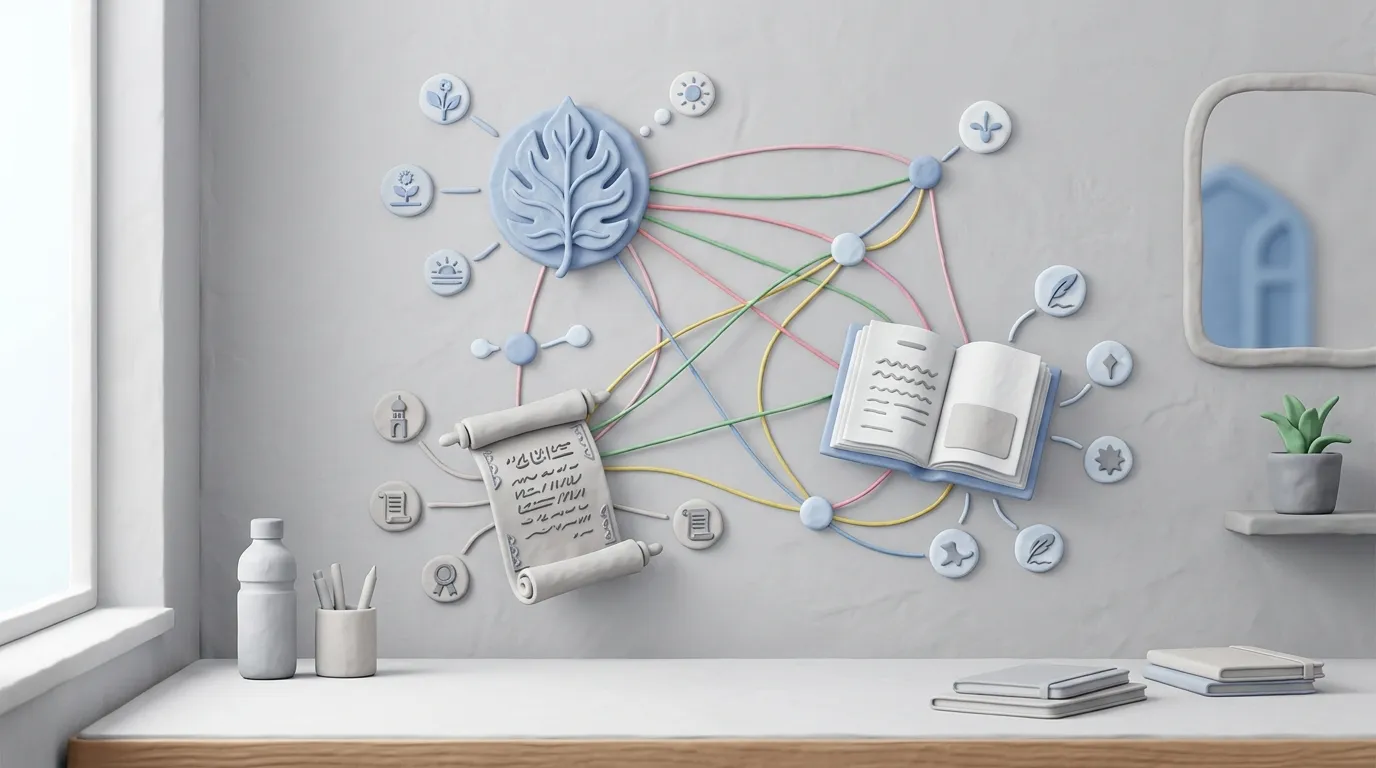
The mind holds information like a network. The more things a new point is connected to, the more ways there are to recall it. A few methods:
- Mind maps: the main topic in the middle of the page, the subtopics around it, and lines showing how they connect. Wonderful for biology, whose chapters are linked to one another.
- Comparison tables: put similar things side by side and write down the differences. Most Konkur tests are built on exactly those differences.
- Examples from life: wherever you can, connect the idea to something you have seen.
| Method | Good for |
|---|---|
| Mind map | Biology chapters, how topics connect |
| Comparison table | Similar concepts, devices that are close to each other |
| Flashcards | Definitions, word meanings, short points |
| A summary in your own words | Long texts in religious studies and literature |
Test yourself instead of rereading
After each section, close the book and write down what you remember. Then open it and see what you left out. That effort to recall fixes things in the mind far more than rereading does. We explain why in active recall.
Spacing: the key to lasting memory
Memorising in one long session is the weakest method. Divide the same time into several short sessions with gaps: today, three days later, a week later, two weeks later. Each review is shorter than the last, because less has been forgotten. The exact timing is in spaced repetition, and for short points the Leitner box does the same thing automatically.
Memory tricks, in moderation
For lists without a clear logic (the order of a few items, a few names in a row), making up a sentence from the first letter of each item helps. But keep this tool for just such lists. If you make a trick for everything, the tricks themselves become things you have to memorise. Understanding first, then a trick — and only where it is needed.
Go through the textbook line by line
In subjects like biology, especially for the Konkur and the final exams, the textbook's details matter: figures, captions, tables, and even words like "all", "most" and "only". Many tests are built on exactly those words. On the second or third reading, go through the book carefully line by line and mark the details you had not noticed before.
Do tests, and record your mistakes
In memorisation subjects, tests are very often built on details and fine differences. For every test question you get wrong, write down why: "I mixed up these two concepts" or "I missed the word 'only'". After a few weeks those notes show you the pattern of your own mistakes. We describe the method in the mistakes notebook.
In Student OS
Flashcards are built for definitions and short points: a hard card comes back sooner and an easy one later. In topics, each topic's confidence fades over time and the review ladder brings it back in time — exactly what memorisation subjects need. Guides: flashcards, topics and review.
Summary
- Even a memorisation subject should be understood first; logic makes memorising easier.
- Connect points with mind maps and comparison tables.
- Instead of rereading, close the book and write from memory.
- Several short reviews with gaps, not one long session.
- Take the textbook's details, and the reason for every wrong answer, seriously.